
FixMyBag

Your TUMI Wheels Are Worn Out? Here’s What to Do Before Replacing the Bag

A TUMI suitcase can go through years of airports, business trips, hotel corridors, railway stations and city streets while the main body remains in excellent condition. Then one day, you notice something small: the suitcase doesn’t glide like it used to. One wheel feels rough. Another wobbles. Maybe there is a clicking sound every time you pull it. It is easy to assume that a damaged wheel means it is time for a new suitcase. It doesn’t necessarily. The wheels are among the most exposed and heavily used parts of any wheeled luggage. They take the impact of uneven surfaces, carry the weight of the packed suitcase and remain in constant contact with the ground. Even a well-built TUMI can eventually need wheel repair or replacement. Before replacing an otherwise perfectly usable suitcase, it is worth having the wheel assembly inspected. In many cases, repairing or replacing the damaged wheel can restore the suitcase’s smooth movement and give it many more journeys. Why Do TUMI Luggage Wheels Wear Out? Luggage wheels have a difficult job. Unlike most components of a suitcase, they are continuously exposed to surfaces outside your control. Airport floors may be smooth, but pavements, roads, station platforms and hotel entrances can be considerably rougher. Frequent pulling also places repeated stress on the wheel and its mounting system. A heavily packed suitcase increases that load further. Impacts during travel can damage the wheel itself or affect the housing that holds it in place. Over time, this can lead to gradual wear rather than one obvious failure. You may first notice that the suitcase feels slightly heavier to pull. Later, the wheel may become noisy or start wobbling. Eventually, a wheel can crack, jam or stop rotating correctly. 7 Signs Your TUMI Wheels Need Repair or Replacement 1. Your TUMI Has Become Difficult to Roll One of the earliest signs of wheel trouble is increased rolling resistance. If your suitcase used to glide easily but now requires noticeably more effort, something may have changed in the wheel system. The cause could be a worn wheel surface, restricted rotation, a damaged internal component, an alignment issue or a problem with the wheel housing. Rather than assuming the entire suitcase has become difficult to use, have the wheel assembly checked. A professional inspection can determine whether the issue can be corrected through adjustment or whether the wheel needs replacement. 2. The Wheels Are Wobbling A wheel that moves excessively from side to side should not be ignored. Wobbling can result from wear, a loose mounting point, axle-related problems or damage to the wheel assembly. You may notice the suitcase becoming unstable when changing direction or travelling over uneven surfaces. In a spinner suitcase, even a problem with one wheel can affect the overall rolling experience. The important thing is to identify why the wheel is wobbling rather than simply tightening or replacing a component without checking the rest of the assembly. 3. You Hear Grinding, Clicking or Squeaking Your luggage doesn’t need to be completely stuck before it needs attention. Unusual sounds such as grinding, clicking, squeaking or scraping can indicate that a wheel or its internal components are wearing out. Sometimes the problem may be minor, while persistent noise can indicate more significant mechanical wear. If a previously quiet suitcase suddenly becomes noisy, it is worth getting the wheels inspected. Catching the problem early may prevent unnecessary stress on other components. 4. One Wheel Isn’t Rotating Properly Spinner wheels are designed to rotate freely so the suitcase can change direction easily. If one wheel feels stiff, sticks intermittently or doesn’t rotate correctly, maneuvering the luggage can become frustrating. A partially jammed wheel can also cause the suitcase to place more load on the other wheels. Continuing to drag the bag when a wheel isn’t functioning properly may make the suitcase harder to control. Depending on the cause, the wheel may be repairable. If the wheel itself is damaged or worn beyond practical repair, replacement may be the better solution. 5. The Wheel Is Cracked, Damaged or Heavily Worn Visible physical damage is one of the clearest signs that a wheel needs attention. Look for cracks, missing sections, flattened areas, severe surface wear or other obvious damage. A wheel that has lost its original shape or has significant damage may no longer provide stable contact with the ground. In these situations, replacing the affected wheel is generally more practical than continuing to use it. The exact replacement, however, should be selected based on the suitcase’s wheel configuration rather than appearance alone. 6. Your TUMI Pulls to One Side A suitcase that consistently pulls in one direction may have uneven wheel wear or a problem affecting one side of the wheel system. This can become particularly noticeable when moving the luggage in spinner mode. Instead of responding smoothly to your movement, the suitcase may feel as though you are constantly correcting its direction. Uneven rolling doesn’t always mean that every wheel needs replacement. An inspection can establish whether the problem is isolated to one wheel or connected to the wider wheel assembly. 7. The Wheel Housing or Mounting Area Is Damaged The housing around the wheel can become cracked, loose or damaged following an impact. The mounting area may also experience stress over years of use. Installing a new wheel without addressing damage to the housing may not solve the underlying problem. This is why a proper luggage wheel inspection should include the wheel, axle or mounting arrangement and surrounding structure – not just the visible wheel surface. Should You Repair or Replace a TUMI Wheel? If the wheel is structurally sound and the problem involves a repairable mechanical issue, adjustment or repair may be sufficient. If the wheel is cracked, badly worn, broken or otherwise damaged beyond practical repair, replacement may be the more reliable option. The condition of the wheel housing matters too. A new wheel cannot compensate for a severely damaged mounting structure. At Fix My Bag, the

Your TUMI Wheels Are Worn Out? Here’s What to Do Before Replacing the Bag Read More »
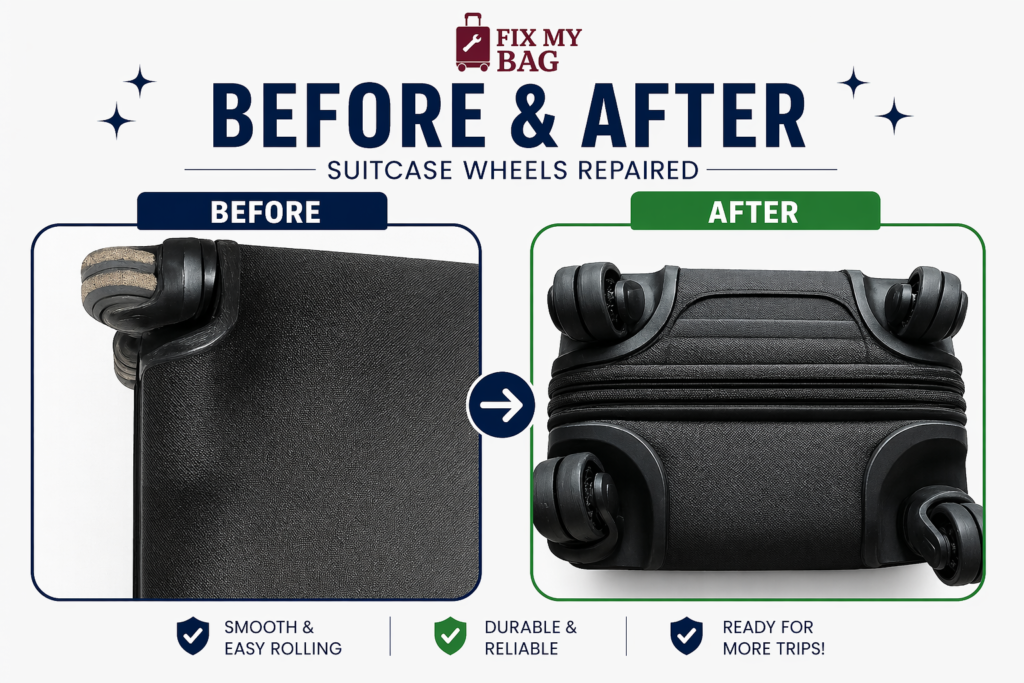
Fix My Bag Review Before After

Luggage Bag Wheel Repair: Complete Guide to Fixing Broken Suitcase Wheels

Travelling with damaged suitcase wheels can turn even a simple journey into a frustrating experience. A bag that drags, wobbles, makes loud noises, or refuses to roll smoothly can slow you down at airports, railway stations, hotels, and city streets. Many people assume that once luggage wheels break, the only option is to buy a new suitcase. The good news is that in most cases, luggage bag wheel repair is possible – and far more affordable than replacing the entire bag. Whether you own a premium suitcase or an everyday trolley bag, this complete guide explains why wheels fail, how they can be repaired, when replacement is needed, and why professional repair is the smartest solution. If you’re in Mumbai, Fix My Bag specializes in expert luggage wheel repairs with fast turnaround and doorstep convenience. Why Suitcase Wheels Get Damaged? Suitcase wheels are one of the most heavily used parts of any bag. Every trip puts pressure on them, especially when the luggage is full and frequently moved across different surfaces. Rough Roads and Uneven Surfaces – Dragging a suitcase over broken pavements, potholes, tiles, gravel, or curbs puts extra strain on wheels and wheel housings. Airport Baggage Handling – Checked-in luggage often experiences rough handling during loading, unloading, and conveyor movement. This can crack wheels or damage wheel mounts. Overloaded Bags – Heavy luggage increases pressure on wheel bearings, axles, and housings, causing faster wear. Frequent Travel – Regular business or family travel naturally leads to long-term wear and tear. Water, Dirt & Rust – Dust, moisture, and rainwater can affect wheel bearings and movement over time. Poor Storage – Keeping luggage under weight pressure or in damp areas can damage wheels and fittings. Signs Your Luggage Wheels Need Repair Many wheel problems begin as minor issues and become worse if ignored. Recognizing the warning signs early can help prevent bigger repairs later. If your suitcase feels heavier than usual while pulling, the wheels may no longer rotate smoothly. Loud squeaking, grinding, or rattling sounds usually indicate bearing wear or loose components. A wobbling bag often means wheel misalignment or axle damage. If your suitcase pulls to one side, one wheel may be jammed or uneven. Visible cracks, broken wheel edges, missing parts, or detached wheels are clear signs that immediate repair is needed. Delaying service can place extra pressure on the remaining wheels and cause further structural damage. Different Types of Suitcase Wheels in 2026 Spinner Wheels (Single 4-Wheel Luggage) Single spinner wheels are one of the most common wheel systems used in modern luggage. These bags have four single wheels, one mounted at each corner, allowing the suitcase to rotate 360 degrees and move smoothly in all directions. This wheel type is ideal for airports, malls, hotels, and smooth floors because it allows you to push or pull the suitcase with minimal effort. It reduces strain on your arm and shoulder compared to traditional two-wheel luggage. Spinner Wheels (Double 4-Wheel Luggage) Double spinner wheels, also called dual spinner wheels, are an upgraded version of standard spinner wheels. Instead of one wheel at each corner, each corner has two wheels side-by-side, making a total of eight rolling wheels. This design provides better balance, smoother movement, and higher weight support. Double spinner wheels are commonly found in premium and large luggage because they handle heavier loads more efficiently. Upright Wheels (2-Wheel Bags) Upright luggage uses two fixed rear wheels and is designed to be pulled behind the traveler at an angle. This is a classic and durable wheel system commonly used in older luggage models and rugged travel bags. Because the wheels are partially recessed into the suitcase body, they are better protected from impact damage. Upright bags also perform better on rough roads, pavements, and uneven surfaces than spinner luggage. Which Wheel Type Is Best? The best wheel type depends on your travel needs: Single Spinner Wheels – Best for light luggage and smooth indoor surfaces Double Spinner Wheels – Best for heavy luggage and frequent travelers Upright Wheels – Best for rough roads, outdoor travel, and durability Can Broken Suitcase Wheels Be Repaired? Yes, in many cases suitcase wheels can be repaired professionally. If the main suitcase body is intact and only the wheel system is damaged, repair is usually practical and cost-effective. Common repairable issues include worn bearings, cracked wheels, loose axles, damaged mounts, or poor alignment. If the wheel housing is severely broken or the base structure is cracked, replacement of the entire wheel assembly may be recommended. A professional inspection helps determine whether repair or replacement is the best long-term solution. Common Luggage Wheel Repairs in 2026 Wheel Replacement – This is the most common service. Damaged or worn wheels are replaced with new durable wheels that match the original size and performance. Bearing Repair or Replacement – If wheels are noisy or stiff, the internal bearings may be damaged. Replacing bearings restores smoother rolling. Wheel Housing Repair – If the frame holding the wheel is loose or cracked, it can often be reinforced or repaired. Axle Repair – Loose or bent axles cause wobbling wheels. Repairing or replacing the axle improves balance and movement. Alignment Correction – Sometimes the wheels are fine, but the bag drags due to incorrect wheel positioning. Proper alignment solves this issue. How Much Does Luggage Wheel Replacement Cost? The cost of luggage wheel replacement depends on the type of wheel system, luggage brand, wheel design, availability of matching parts, and the extent of damage. Premium brands or specialized wheel assemblies may cost more than standard models. Below are the common price ranges for wheel replacement: Single Spinner Wheels (4-Wheel Luggage) For luggage with one wheel at each corner. Estimated Cost: ₹600 – ₹1,200 Best for cabin bags, medium suitcases, and standard spinner luggage. Double Spinner Wheels (Dual 4-Wheel Luggage) For luggage with double wheels at each corner for extra support and smoother movement. Estimated Cost: ₹800 – ₹2,000 Common in premium luggage and large check-in suitcases. Upright

Luggage Bag Wheel Repair: Complete Guide to Fixing Broken Suitcase Wheels Read More »

Scroll to Top